Showing posts with label nutrition. Show all posts

Monday, October 13, 2008

How much of nutrients needed for healthly life?


I gave the glimpse of calorie and nutrition in the earlier posts. Here I would like to give inputs on other basic nutrition informations,DRI, RDA and AI which is being recommended by nutrition boards all over the world.


DRI, RDA, AI :

Dietary Reference Intakes (DRIs) comprise a set of reference values for specific nutrients, each category of which has special uses. The reference values, collectively called the Dietary Reference Intakes (DRIs), include the Estimated Average Requirement (EAR), Recommended Dietary Allowance (RDA), Adequate Intake (AI), and Tolerable Upper Intake Level (UL)

RDA ( Recommended Daily allowance) :

It is the average daily dietary nutrient intake level sufficient to meet the nutrient requirement of nearly all (97 to 98 percent) healthy individuals in a particular life stage and gender group.

The RDA are based on scientific knowledge and have been presented by a committee of the Food and Nutrition Board (FNB) of the National Academy of Sciences (NAS). RDA is generally accepted throughout the world as a valid source of information.

Adequate Intake (AI):

The recommended average daily intake level based on observed or experimentally determined approximations or estimates of nutrient intake by a group (or groups) of apparently healthy people that are assumed to be adequate—used when an RDA cannot be determined.

The following Chart gives details for Recommended intakes for Major nutrients.
Posted by Picasa

The general guideline is that approximately 57%, 30%, 13% of energy should come from Carbohydrates, Fats and Protein respectively.


Monday, June 2, 2008

What are nutrients?

Let see here about Major nutrients and Minor nutrients of nutrition and diet .

Major Nutrients :
Major nutrients are the one required in more amounts by body. Micronutrients are also of equal importance but are required in small amounts.
The three major nutrients available in food are

1. Carbohydrates
2. Proteins
3. Fat
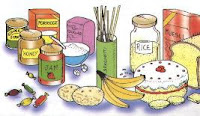
Carbohydrates:
Carbohydrates break down into sugars (glucose) by liver and this sugar is used for energy for cells ,tissues and organs. Or it can also be stored in liver and muscles for future use.
carbohydrates are called simple and complex depending on how fast it is broken down to sugar. 
Complex carbohydrates (good Carbs) are starch and dietary fibers (whole grain breads and brown rice). They provide minerals fiber and vitamins. But processed rice and polished grains lack these essential nutrients. 
Simple carbohydrates are from fruits, table sugar and milk products .The products with refined sugar and added sugar (added while processing and refining ) are not natural and provide less nutrition.
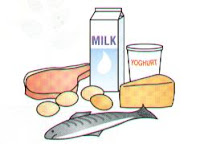
Proteins:
Our body’s cells and tissues and organs have proteins in them. These proteins are constantly being broken down into and replaced. To replace these, our body needs proteins from diet. The dietary proteins are broken down into amino acids and then these amino acids are manufactured into the proteins desired for the organs and cells.
All proteins are made up of amino acids. There are 20 different amino acids which from human body. Our body cannot make all these 20 amino acids. So they need to be provided to the body through diet. Among the 20 amino acids 9 amino acids are called essential amino acids. Though all amino acids are important these 9 amino acids are called essential in the sense that the are not available from non vegetarian food. Fortunately these are available in soy protein.
The dietary proteins is obtained from egg, fish, meats, nuts, seeds, legumes, beans and milk products. Vegetarians need more planning to meet the dietary intake of proteins. Foodstuffs that lack of essential amino acids are poor sources of protein equivalents, as the body tends to converting proteins into fats and carbohydrates. Therefore, a balance of essential amino acids is necessary for a high degree of net protein utilisation by body.
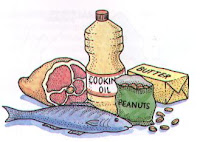

Fats:
Fats have two sides.Good side and bad side.
Good side of fats is that they play improtant role in skin and hair.Fat is needed to carry and to absorb some vitamins into our body.Fat stores serves as engery reserves of our body. Fat breaks down into glycerol which again is broken down into glucose and gives energy.
But the bad side of fats is that toomuch intake of fats results in increase in blood cholesterol, heart attack, weight gain and obesity.
Thus the fats are listed as good and bad fats.
The good fats are unsaturated fatty acids.( poly and mono) Vegetable oils – such as corn, soybean and sunflower oils – as well as fish oils, are rich in polyunsaturated fat. Olive, peanut and canola oils are rich in monounsaturated fat. These are liquid at room temperature. The bad fats are saturated fats, such as butter, ghee, shortening, lard and animal fat(beef,pork,whole milk,cheese,sour cream ,yogurt) ,coconut oil and palm oil which are solid at room temperature.

Micronutrients:

Micronutrients are vitamins and minerals needed by body in minute amounts. Only these substances play leading roles in the production of enzymes, hormones and other substances.They help to maintain strength, immunity, and mental sharpness and to bear healthy children. They have major role in life saving role in major developing countries. One third of total population worldwide is affected by micronutrient deficiencies. The most common deficiencies are due to lack of iron (anemia), vitamin A (exophthalmia) and iodine (goiter and cretinism).

Vitamins :
Vitamins are needed to keep our body healthy. Most vitamins are made by plants. We get vitamins by eating plants and animal products.

Minerals:
Minerals are used for building bones and teeth. They give energy to work, learn and play. Minerals are found in eggs, milk products, seafood, leaves and seeds of planets and in organ meat such as liver, kidneys and hearts of animals.

Due to manufacturing process and refining and polishing process in grains, the minerals and vitamins in foods are mostly lost. And after cooking or baking again the micronutrients gets depleted. That is the reason these days the micronutrient deficiency is increasing. In olden days our grandparents were able to live in a cleaner healthier and greener environment. They had easy access to fresh vegetables and fruits and medicinal herbs. But in this mordern world we use mostly canned ,tinned, packed, foods which are all dead foods. So having fortified (equipped with vitamins) foods and nutrient supplements are important to get the balance in the body.

Monday, May 12, 2008

What is relation between nutrition and killer diseases?

What is Nutrition and what is a proper diet?

In all the previous posts I talked about the killer diseases and as a remedy for each diseases it is said that proper diet and physical activity is important. But what is proper diet? Everyone talks about proper diet and nutrition. But if we know the basics of this so called “nutrition” then wont it be easy to understand the word “Diet”? But nutrition is a vast subject and it can never be written in few paragraphs. So I decided to compile few and highlight the importance of nutrition in this blog.

We all have heard the old tamil sayings about nutrition here. That is “உணவே மருந்து” , அளவுக்கு மீறினால் அமுதமும் நஞ்சு” That is to say that "Food is medicine for all diseases and food can prevent any diseases too". Also "Nutrition is food but all foods are not nutrition" and if the food intake is excess or deficient in some nutrients then definitely it will bring troubles.
Good Nutrition is vital for health , disease prevention and is important for growth and development for small children and adults. Good nutrition is important to maintain our health. It is like fuel for cars. Without the fuel, cars can never run. Similarly without good nutrition our body cannot function well.So just like gasoline gives energy for car to run ,good nutriton gives energy for our body to run. This energy is measured in kilocalories or calories.
The nutrional requirements for each person varies depending upon age, sex, body height , body weight ,status of work and rate of growth. But average requirements for each nutrient for a person based on calorie is fixed by scientific community.

What is in food?
According to our body, the food is composed of many nutrients. Some nutrients are used for energy ( carbohydrates and fats) some are mainly for building materials ( proteins and minerals) and some other are for using or making the energy by process called metabolism and managing the chemical reactions in the body ( vitamins and fatty acids). Each body functions requires some energy to perform the actions and it is provided in calories by these nutrients. Thus the energy intake of food is burned off for bodily functions.
To operate at its best, the body needs these nutrients in the right amounts. So whether it is carbohydrate or protein or fat anything taken in excess than required and if not burned they get stored for later use. This will lead to weight gain and all health problems. Also if the food is deficient in some nutirents then the dysfuncitoning of body will occur. That is too much or too little can—and often does—result in the body dysfunctioning. That's what we know as disease. there are many numbers of researches done to support this relation of diet and killer diseases by scietific community.

Saturday, February 16, 2008

How is obesity treated?

How is Obesity treated?

Losing weight is simple, not to say that it is necessarily easy. Proper nutrition can cure all diseases and can prevent diseases too.But all Nutrition is food and not all food is nutritious. This simple concept is very much important while loosing weight.The food can be compared to a fuel for functioning of car. Any excess fuel poured in the fuel tank of the car gets wasted in the car. ( a 5 lr fuel tank never can hold 1000 lr fuel) . But in our body the excess food (fuel) gets stored as fat for future use. It is definately not needed to store it if we continue to give the food regularly needed by the body.The storage capacity is just the nature of our body, to prevent us from drought or starvation conditions which existed in the old days. But now a days food is abundant and it is the cause for obesity in delveloping countries. It is definately much harder to carry this stored fat and our body needs more fuel just to perform this storage function by the body. so we put more strain to the body by eating excess.
So Proper planned nutrition and diet plays major role in effective weight loss.
· Life style change
The first step in weight loss is to achieve a reasonable goal, which is to begin making lifestyle changes by increasing physical activity and limiting calories. A reduction of 6-10 lbs can significantly decrease the cardiovascular health risks of overweight or obese people.
Loosing 10% of the weight at a rate of 1-2 lbs per week improves health and sets a good starting in the journey of weight loss.

· Food

Proper diet and nutrition is a very important part of staying healthy—for everyone—and especially for a obese/overweight person. By decreasing daily calorie intake by 500 calories calories you will lose about 1 pound per week. Approximately if the target weight (Normal weight range of BMI) is say 110 lbs then the calorie intake per day should be aimed to 1100 per day with nutritious foods and healthy foods.
The healthy foods include good carbohydrates (complex carbohydrates), proteins, vegetables, fruits, minerals, fiber and good fats. Each body needs 1-2 grams of protein per kg body weight. By reaching the daily allowance of protein each each day, the metabolism can be increased and that can help to burn the stored fat. Consumption of excess carbohydrates and fats can result in storage of fats and
not burning of fats. So care should be taken in consuming carbohydrates and fats.
The easiest and best way is to start herba life products. Herbalife shakes has no cholesterol, low carbohydrate, no transfat and low salt. It is rich in protein and full of essential nutrients and fiber. Also Herbalife is the only food, which provides enzymes, and ginger and other nutrients that facilitate assimilation of the nutrients in to our body effectively .That makes herbalife the ideal food for every nutritional need and for effective weight loss.

Exercise:

Another factor helping weight loss includes exercise. It helps to increase metabolism and is one less opportunity to eat during the day. You should exercise for at least 30 minutes, 5 times a week. Regular exercise helps to burn calories. But even if lot of calories are burned by exercise, if the calorie intake by consuming foods are more, then weight loss will not be effective.